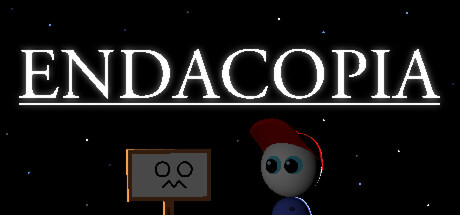
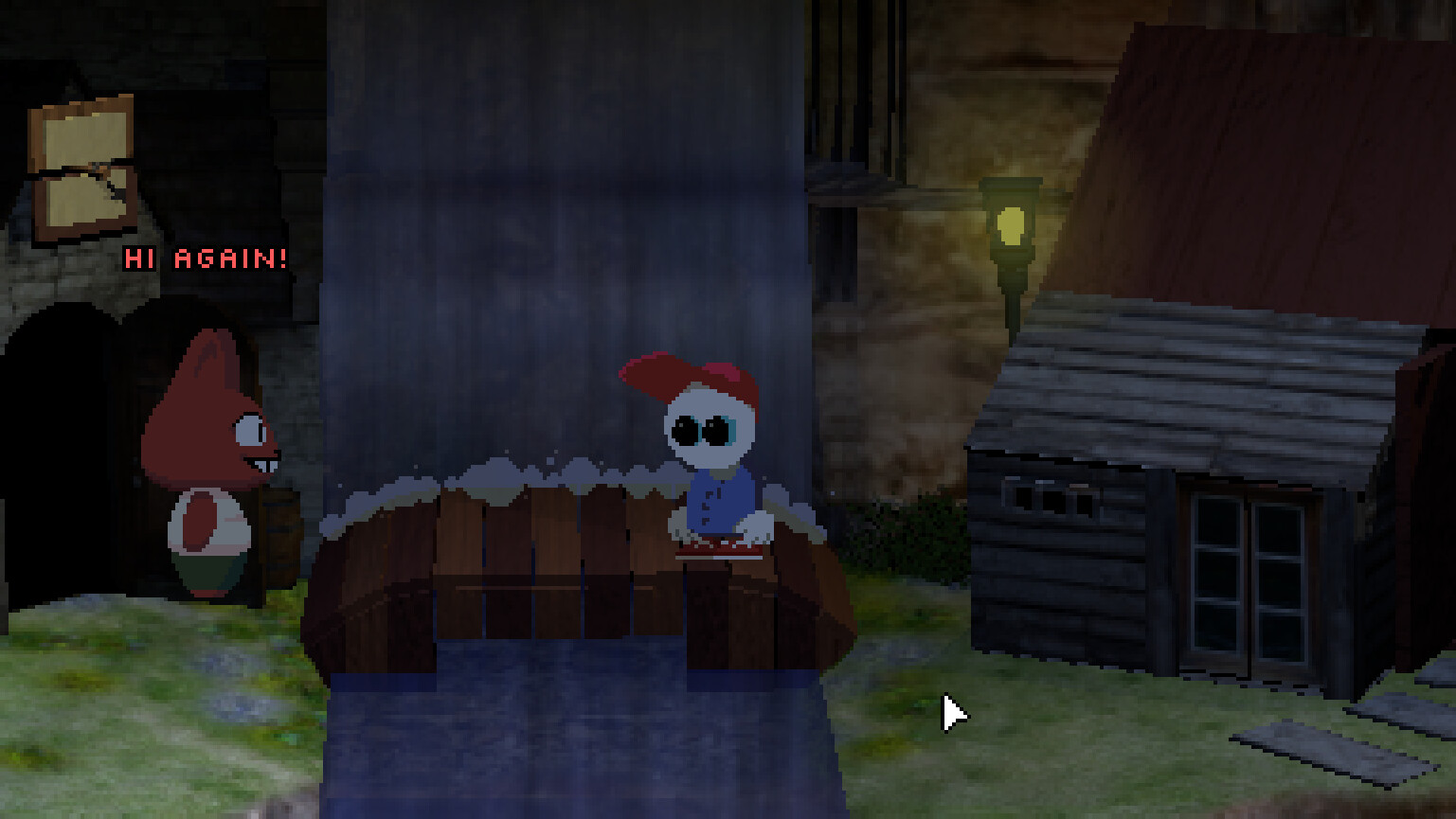
Endacopia is a single-player point-and-click puzzle adventure by Andyland, released on Steam on July 27, 2026. This independent wiki separates spoiler-light orientation from route, puzzle, character, item, achievement, and ending help so a first playthrough can stay surprising.
What is Endacopia?
Endacopia is a point-and-click puzzle adventure by Andyland, released for PC through Steam on July 27, 2026. Its official store description frames the game like an early computer edutainment title with something much darker underneath: explore, talk, inspect, and solve puzzles while the cheerful presentation becomes less trustworthy.
You play alone with a keyboard and mouse. The game rewards deliberate attention: a room, dialogue line, inventory item, or computer screen can change the meaning of something you already saw. This wiki is arranged around that rhythm—start without heavy spoilers, then move into focused help only when you need it.
The likely gameplay loop
The official genre framing points to a familiar but satisfying loop: inspect a scene, identify interactive objects, talk to characters, collect or use items, and revisit earlier assumptions after the world changes. Endacopia adds tension by making visual jokes and unsettling details carry both atmosphere and puzzle information. A decoration may be a clue; an interface element may be part of the fiction.
A productive way to play is to separate observations from conclusions. Record what the game actually shows, then note what you think it means. This distinction prevents one early theory from blocking later progress. The beginner guide, puzzle guide, and item log all use that evidence-first method.
- Inspect before clicking rapidly; composition and object placement can be clues.
- Revisit scenes after dialogue, inventory changes, or completed interactions.
- Treat sound, animation, cursor feedback, and interface changes as evidence.
- Keep uncertain theories flexible until the game confirms them.
How this wiki is organized
The guide index is split into four useful layers. Orientation pages explain the game and safe starting habits. Reference pages collect characters, locations, items, and media without forcing a narrative interpretation. Help pages cover controls, puzzle methods, and the demo route. Time-sensitive pages track release information and system requirements with an explicit verification date.
This separation matters for a game whose ambiguity is part of its identity. A player searching for a control reminder should not be exposed to a late puzzle answer, while a reader studying the world should be able to distinguish visual evidence from speculation. Every page includes a source-status note and related routes so that the user can move deeper without losing context.
What counts as confirmed
A statement is treated as confirmed only when it is supported by retained official material or by direct, reproducible observation in a playable build. Store descriptions and developer posts are primary sources for names, genre, availability, and release messaging. Screenshots are primary evidence for visible objects and locations, but not automatically for their hidden function. Community labels are useful search terms, yet they remain secondary until the game or developer adopts them.
The final implementation phase was completed under a no-web boundary. Therefore, volatile claims such as release date, price, supported operating systems, and demo availability are intentionally phrased as a frozen snapshot and paired with a verification instruction. This is not a weakness in the editorial model; it is how the site avoids presenting stale information as current fact.
Spoiler policy
The site uses three spoiler levels. Green pages are orientation-only and avoid solutions. Amber sections discuss puzzle structure or scene progression without revealing exact outcomes. Red-labeled details may disclose item uses, event order, or consequences. The demo walkthrough begins spoiler-light and moves into stronger guidance only after a visible warning.
Because the current evidence set does not preserve a complete, versioned playthrough, this guide does not pretend to offer an exact click-by-click solution. It provides a reliable route framework and reserves exact steps for actions that can be reproduced in a named game build.
How updates should be made
A useful wiki needs more than new prose. When the game changes, editors should update the fact record, source register, page content, media manifest, and visible review date together. A release-date change should not be edited in one paragraph while remaining stale in metadata or FAQ answers. The repository includes machine-readable contracts so that later automation can detect those mismatches.
When the game changes, editors should run the full validation suite, inspect desktop and mobile layouts, and compare time-sensitive statements against official sources. New screenshots need alt text, a source URL, capture date, rights note, dimensions, and route usage before publication.
Frequently asked questions
Is this the official Endacopia website?
No. This is an independent fan-made reference and guide site. Use the official store and developer channels for purchases, support, and announcements.
Does the wiki include spoilers?
Yes, but solution-heavy material is separated and labeled. The overview and beginner guide are designed to remain spoiler-light.
Why are some details marked unverified?
Time-sensitive facts are dated and linked to official sources. Details that cannot be reproduced or rechecked remain explicitly provisional.
Where should a new player begin?
Read the beginner guide, then use the demo walkthrough only when a scene has genuinely stopped yielding new observations.